
Wir freuen uns, bekannt zu geben, dass wir nun den CO2-Fußabdruck unserer Trockenblumen berechnen können. In Zusammenarbeit mit Greenhouse Sustainability haben wir tiefgehende Einblicke in die Nachhaltigkeit unserer Produkte gewonnen. Da die Frage „Wie nachhaltig ist etwas wirklich?“ in unserer Gesellschaft immer wichtiger wird, bestätigen unsere Ergebnisse, dass unsere Trockenblumen und Sträuße einen sehr geringen CO2-Fußabdruck haben und somit ihre minimale Auswirkung auf die Umwelt unterstreichen.
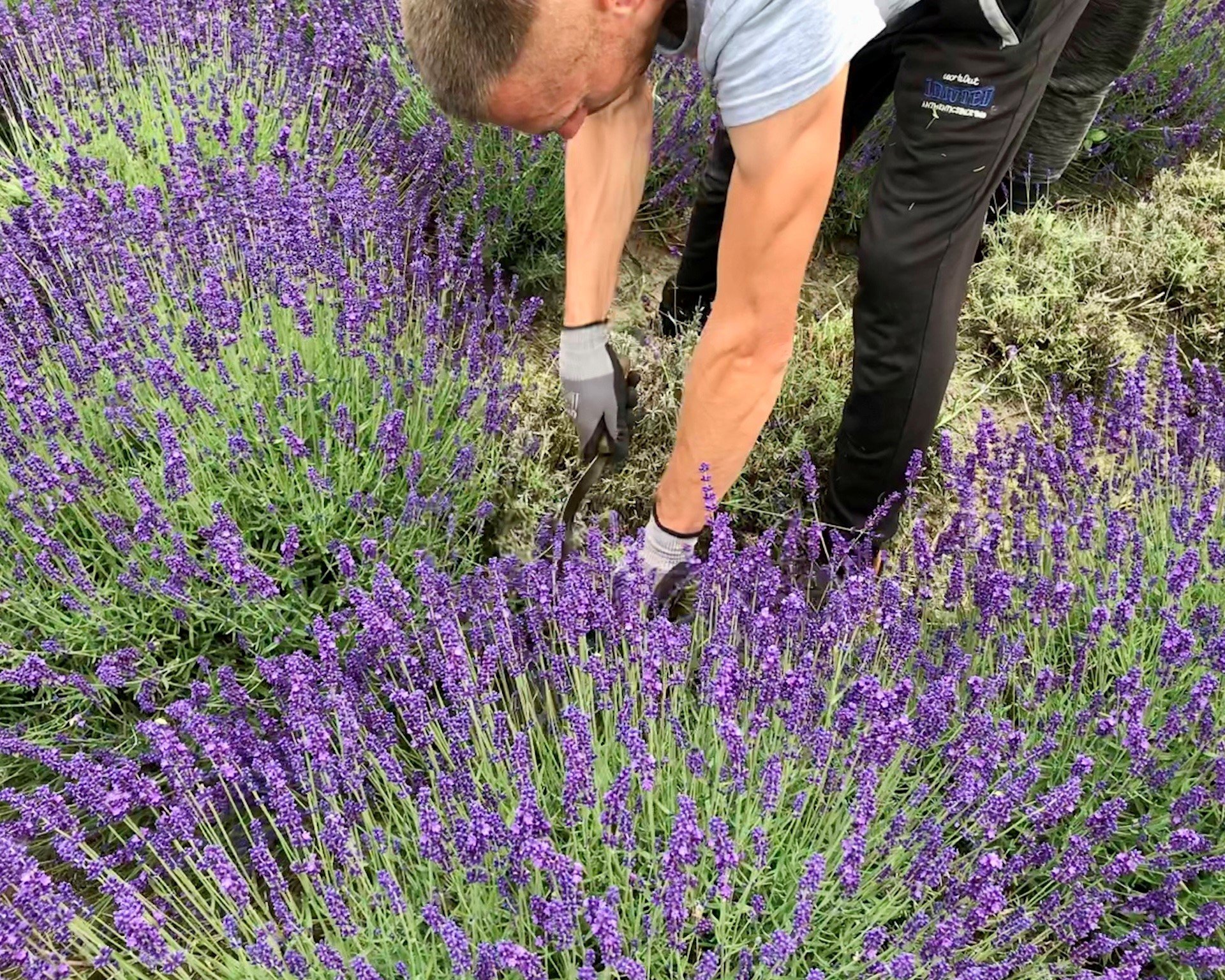
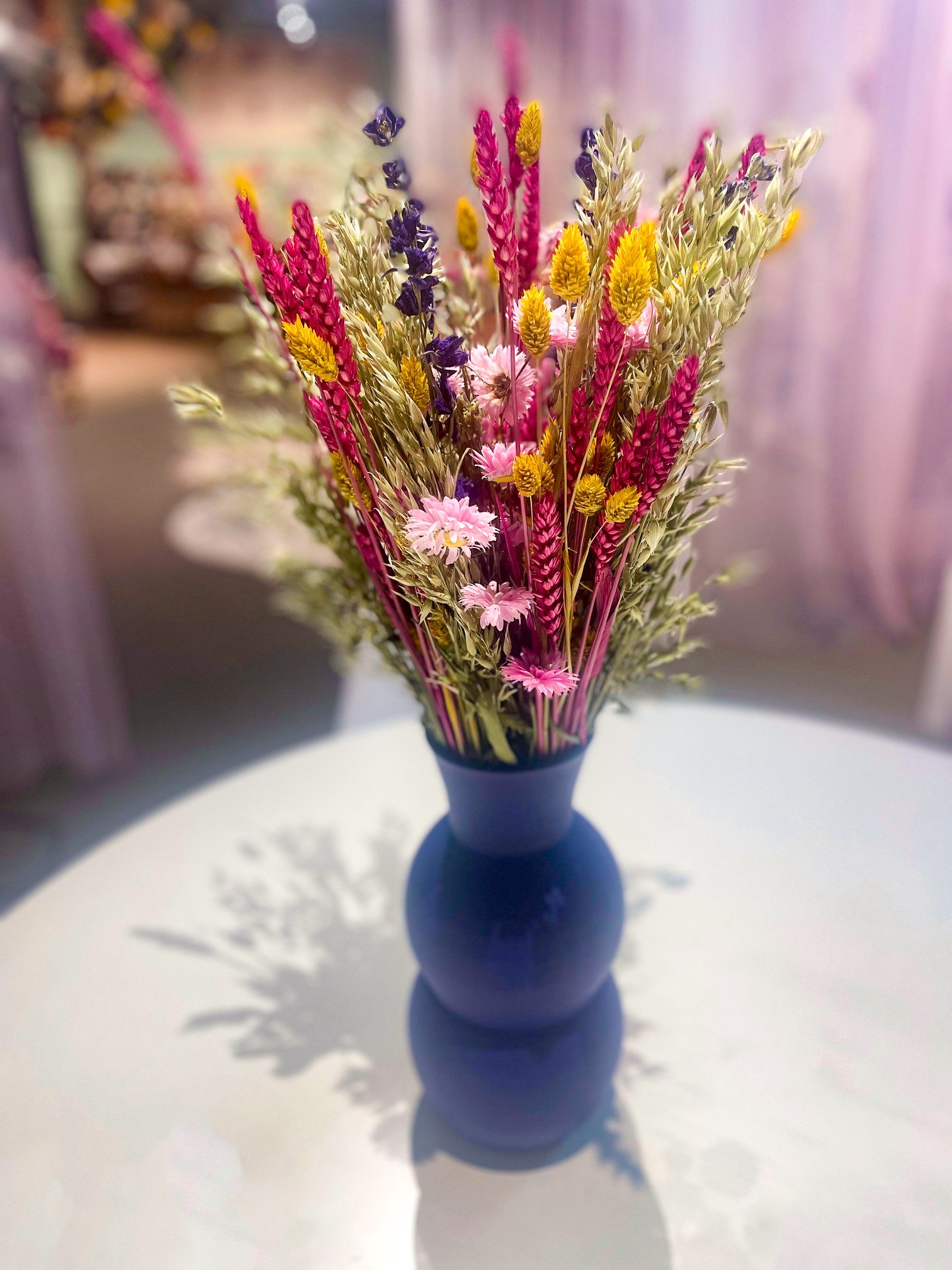
Nehmen Sie zum Beispiel unseren Strauß Vibrant. Dieser mittelgroße Strauß, bestehend aus verschiedenen Trockenblumen in unterschiedlichen Farbkombinationen, verursacht nur 0,53 kg CO2. Diese Berechnung umfasst den gesamten Prozess, von der Aussaat und Ernte der Blumen bis hin zum Trocknen, Verpacken und Vorbereiten für den Transport – von der Wiege bis zum Tor. Zum Vergleich: Der durchschnittliche CO2-Fußabdruck einer Flasche Wein beträgt 1,3 kg CO2, und der einer Tafel Schokolade 1,78 kg CO2. Unsere niedrigen Emissionen sind durch den lokalen Anbau, die lange Haltbarkeit, den verantwortungsvollen, nicht gekühlten Transport und die biologische Abbaubarkeit unserer Blumen möglich.
Bei Lamboo Dried & Deco gehen wir über unsere Blumen hinaus. Wir nutzen einen Kreislaufprozess, in dem wir unsere eigenen Trockenblumenabfälle zu Trockenblumen-basiertem Papier verarbeiten, einer nachhaltigen Verpackung ohne Plastik. Wir verwenden nur Karton und Papierklebeband, um unseren ökologischen Fußabdruck zu minimieren.
An unserem Standort in Lisse, Niederlande, haben wir 360 Solarpaneele und energieeffiziente LED-Beleuchtung installiert, was unseren ökologischen Fußabdruck weiter verringert. Seit 2015 sind wir ETI-zertifiziert, was beweist, dass wir nicht nur umweltfreundlich, sondern auch ethisch produzieren. Wir verbessern uns ständig und streben nach noch nachhaltigeren Prozessen.
Erfahren Sie hier mehr über unsere Nachhaltigkeitsinitiativen.
Hier finden Sie eine Übersicht über häufig gestellte Fragen zum CO2-Fußabdruck. Haben Sie Ihre Frage hier nicht gefunden? Kontaktieren Sie uns gerne.
1. How is the CO2 footprint calculated?
Our CO2 footprint is calculated using the Cradle to Gate approach. This covers everything from the cultivation and harvesting of the flowers to the drying process, packaging, and transportation to our dock. The calculations are conducted in collaboration with Greenhouse Sustainability, an independent expert in sustainability analysis.
2. Are there any hidden emissions not included in the calculation?
Our calculation is as comprehensive as possible and includes all steps up to the point where the dried flowers are ready for transport. While factors like the use of fossil fuels in transportation still present challenges, we continue improving our processes to achieve further reductions.
3. Is drying flowers energy-intensive?
Drying, preserving, and conserving our flowers is an energy-intensive process, but we have taken measures to minimize this impact, such as utilizing our own solar energy generated by 360 solar panels at our location. Part of the heat is reused during the process. This makes our process more energy-efficient and sustainable. Additionally, dried flowers provide significant savings on the other side. They require no water, no refrigerated transport, and have an exceptionally long shelf life.
4. How sustainable is the transportation of your dried flowers?
We work with local carriers who offer sustainable logistics solutions. Since our products don’t require refrigerated storage or fast distribution, we can use transport methods with lower energy consumption and CO2 emissions.
5. What about the CO2 emissions from your suppliers?
We aim to use as many locally grown flowers as possible to reduce transport distances. Additionally, we work closely with our suppliers to improve their sustainability practices and jointly reduce our ecological footprint.
6. How is the lifespan of dried flowers factored into the footprint?
The long lifespan of dried flowers is a crucial aspect of their sustainability. This is also reflected in a day footprint, which for our bouquet „Vibrant“ amounts to 0.001 kg. Because they last much longer than fresh flowers, they need to be replaced less frequently, contributing to a lower overall CO2 footprint over their lifespan.
7. How responsible are the materials used for packaging?
We exclusively use sustainable materials such as cardboard and paper tape, avoiding plastic entirely. Additionally, we use our own ‘Dried Flower Based Paper’ for packaging, which is an example of circular production.
8. How ethically responsible is your dried flower production?
Our production processes are both environmentally friendly and ethically responsible. This is highlighted by our ETI certification, which ensures that we provide fair and safe working conditions in accordance with international standards.
9. Will the CO2 footprint decrease further in the future?
In addition to the steps we’ve already taken, we continually improve in sustainability. We are exploring new ways to reduce our CO2 emissions, such as more efficient transportation, forming sustainable partnerships, and improving production efficiency. Moreover, we’re working on innovative solutions like our circular packaging and expanding our use of renewable energy.
10. Why is it important to choose products with a low CO2 footprint?
Products with a low CO2 footprint help mitigate climate change by minimizing greenhouse gas emissions. By choosing dried flowers, you contribute to a more sustainable world.
11. Are your dried flowers organic?
Unfortunately, it is still necessary to use crop protection products during the production of dried flowers. As a result, we cannot label the product as ‚organic.‘ In collaboration with our growers, we do everything possible to keep the use of crop protection products as low as possible and introduce environmentally friendly and organic solutions. Since dried flowers require no water, crop protection, or preservatives after drying, they also contribute to a more sustainable world. We strive to make our production processes as environmentally friendly as possible by using natural and sustainable methods.