
We are proud to announce that we can now calculate the CO2 footprint of our dried flowers. In collaboration with Greenhouse Sustainability, we have gained in-depth insight into the sustainability of our products. As the question “How sustainable is something really?” becomes more important in our society, our results confirm that our dried flowers and bouquets have a very low CO2 footprint, emphasizing their minimal impact on the environment.
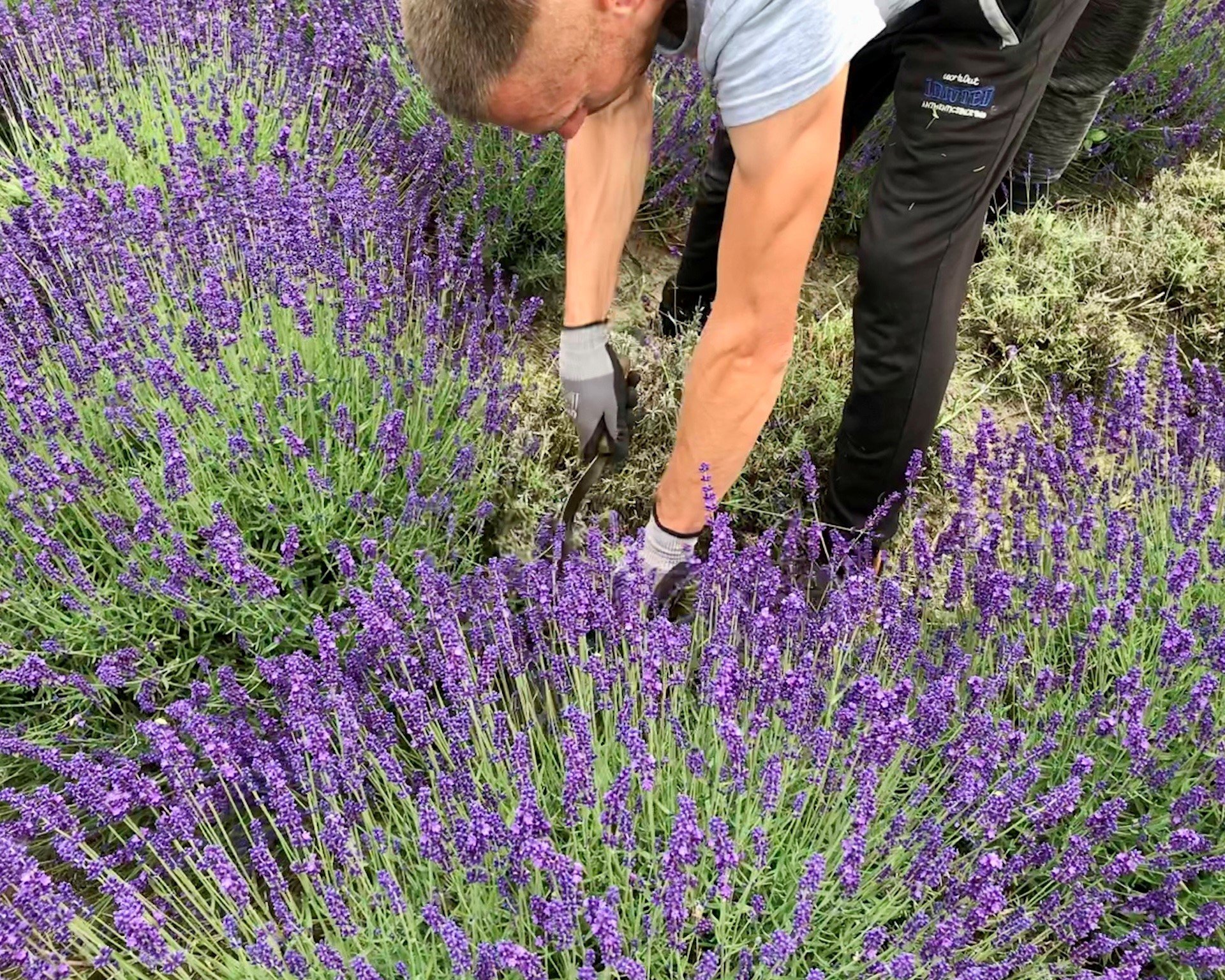
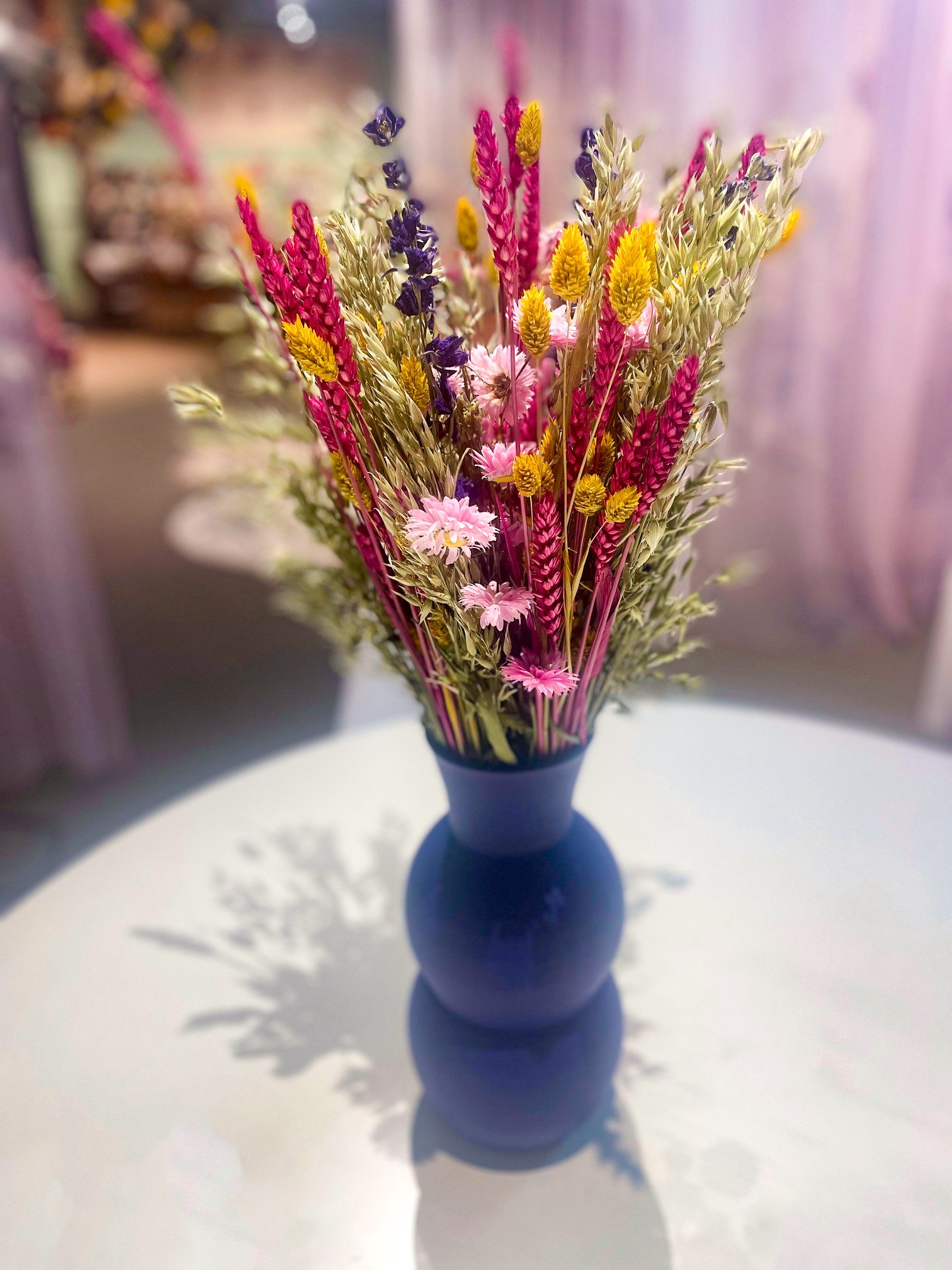
Take our Vibrant Bouquet as an example. This medium-sized bouquet, composed of various types of dried flowers in different color schemes, has an emission of only 0.53 kg CO2. This calculation covers the entire process, from sowing and harvesting the flowers to drying, packaging, and preparing them for transport — from Cradle to Gate. For comparison: the average CO2 footprint of a bottle of wine is 1.3 kg CO2, and that of a chocolate bar is 1.78 kg CO2. Our low emissions are made possible by local cultivation, long shelf life, responsible, non-cooled transport, and the biodegradability of our flowers.
At Lamboo Dried & Deco, we go beyond just our flowers. We use a circular process where we turn our own dried flower waste into Dried Flower Based Paper, a sustainable packaging with no plastic involved. We use only cardboard and paper tape to minimize our ecological impact.
At our location in Lisse, the Netherlands, we have installed 360 solar panels and energy-efficient LED lighting, further reducing our ecological footprint. Since 2015, we have been ETI certified, proving that we produce not only in an environmentally friendly way but also ethically. We continuously improve and strive for even more sustainable processes.
Here you will find an overview of frequently asked questions about the CO2 footprint. Don’t see your question here? Feel free to contact us.
1. How is the CO2 footprint calculated?
Our CO2 footprint is calculated using the Cradle to Gate approach. This covers everything from the cultivation and harvesting of the flowers to the drying process, packaging, and transportation to our dock. The calculations are conducted in collaboration with Greenhouse Sustainability, an independent expert in sustainability analysis.
2. Are there any hidden emissions not included in the calculation?
Our calculation is as comprehensive as possible and includes all steps up to the point where the dried flowers are ready for transport. While factors like the use of fossil fuels in transportation still present challenges, we continue improving our processes to achieve further reductions.
3. Is drying flowers energy-intensive?
Drying, preserving, and conserving our flowers is an energy-intensive process, but we have taken measures to minimize this impact, such as utilizing our own solar energy generated by 360 solar panels at our location. Part of the heat is reused during the process. This makes our process more energy-efficient and sustainable. Additionally, dried flowers provide significant savings on the other side. They require no water, no refrigerated transport, and have an exceptionally long shelf life.
4. How sustainable is the transportation of your dried flowers?
We work with local carriers who offer sustainable logistics solutions. Since our products don’t require refrigerated storage or fast distribution, we can use transport methods with lower energy consumption and CO2 emissions.
5. What about the CO2 emissions from your suppliers?
We aim to use as many locally grown flowers as possible to reduce transport distances. Additionally, we work closely with our suppliers to improve their sustainability practices and jointly reduce our ecological footprint.
6. How is the lifespan of dried flowers factored into the footprint?
The long lifespan of dried flowers is a crucial aspect of their sustainability. This is also reflected in a day footprint, which for our bouquet “Vibrant” amounts to 0.001 kg. Because they last much longer than fresh flowers, they need to be replaced less frequently, contributing to a lower overall CO2 footprint over their lifespan.
7. How responsible are the materials used for packaging?
We exclusively use sustainable materials such as cardboard and paper tape, avoiding plastic entirely. Additionally, we use our own ‘Dried Flower Based Paper’ for packaging, which is an example of circular production.
8. How ethically responsible is your dried flower production?
Our production processes are both environmentally friendly and ethically responsible. This is highlighted by our ETI certification, which ensures that we provide fair and safe working conditions in accordance with international standards.
9. Will the CO2 footprint decrease further in the future?
In addition to the steps we’ve already taken, we continually improve in sustainability. We are exploring new ways to reduce our CO2 emissions, such as more efficient transportation, forming sustainable partnerships, and improving production efficiency. Moreover, we’re working on innovative solutions like our circular packaging and expanding our use of renewable energy.
10. Why is it important to choose products with a low CO2 footprint?
Products with a low CO2 footprint help mitigate climate change by minimizing greenhouse gas emissions. By choosing dried flowers, you contribute to a more sustainable world.
11. Are your dried flowers organic?
Unfortunately, it is still necessary to use crop protection products during the production of dried flowers. As a result, we cannot label the product as ‘organic.’ In collaboration with our growers, we do everything possible to keep the use of crop protection products as low as possible and introduce environmentally friendly and organic solutions. Since dried flowers require no water, crop protection, or preservatives after drying, they also contribute to a more sustainable world. We strive to make our production processes as environmentally friendly as possible by using natural and sustainable methods.